Category: Blog
-

It is that moment in history when people are weighing social media stress against its benefits. Especially in academia Mike Young They call it the ‘digital backlash’. People are starting to question norms about digital behaviour, consumption, and habits. After 20 years, social media no longer live up to the promise or hype. It has become…
-

Inspired by Jason Thatcher‘s provocative, yet inspiring opinion piece about #technostress research, I feel compelled to comment on what more is there to look into when it comes to technostress research. As Jason discusses, it’s been two decades since #technostress research entered Information Systems. However, it’s almost four decades since #technostress was first defined. In information systems, we’ve primarily focused on one…
-
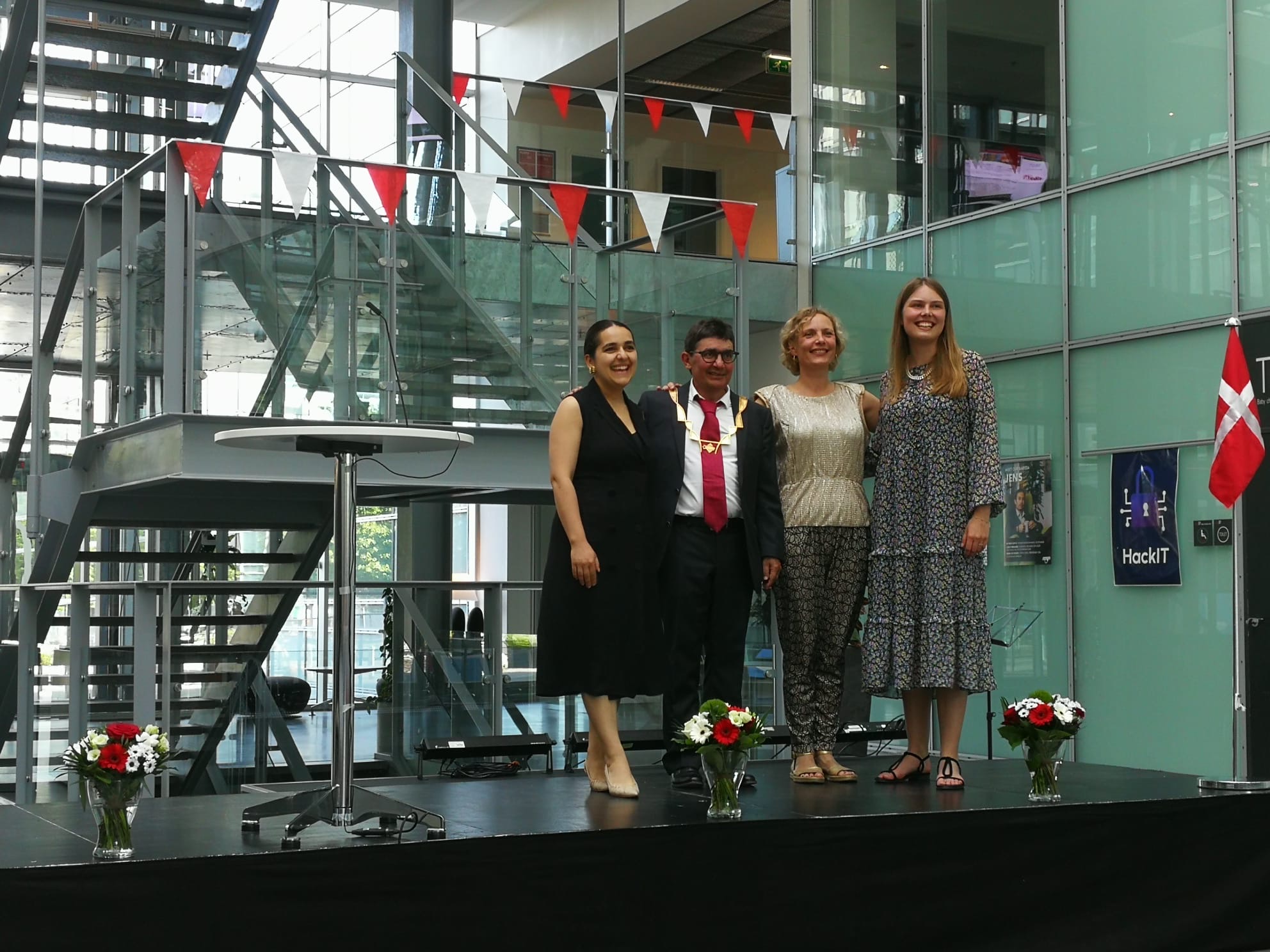
The other day I got to go back to IT-Universitetet i København as an Alumni #speaker at the graduation ceremony and share the stage with Jens Christian Godskesen, Pernille Rydén and Helle Friis. What an honor to share the day with so many ending an important chapter in their lives, while I got to reflect back on my own journey and learnings,…
-
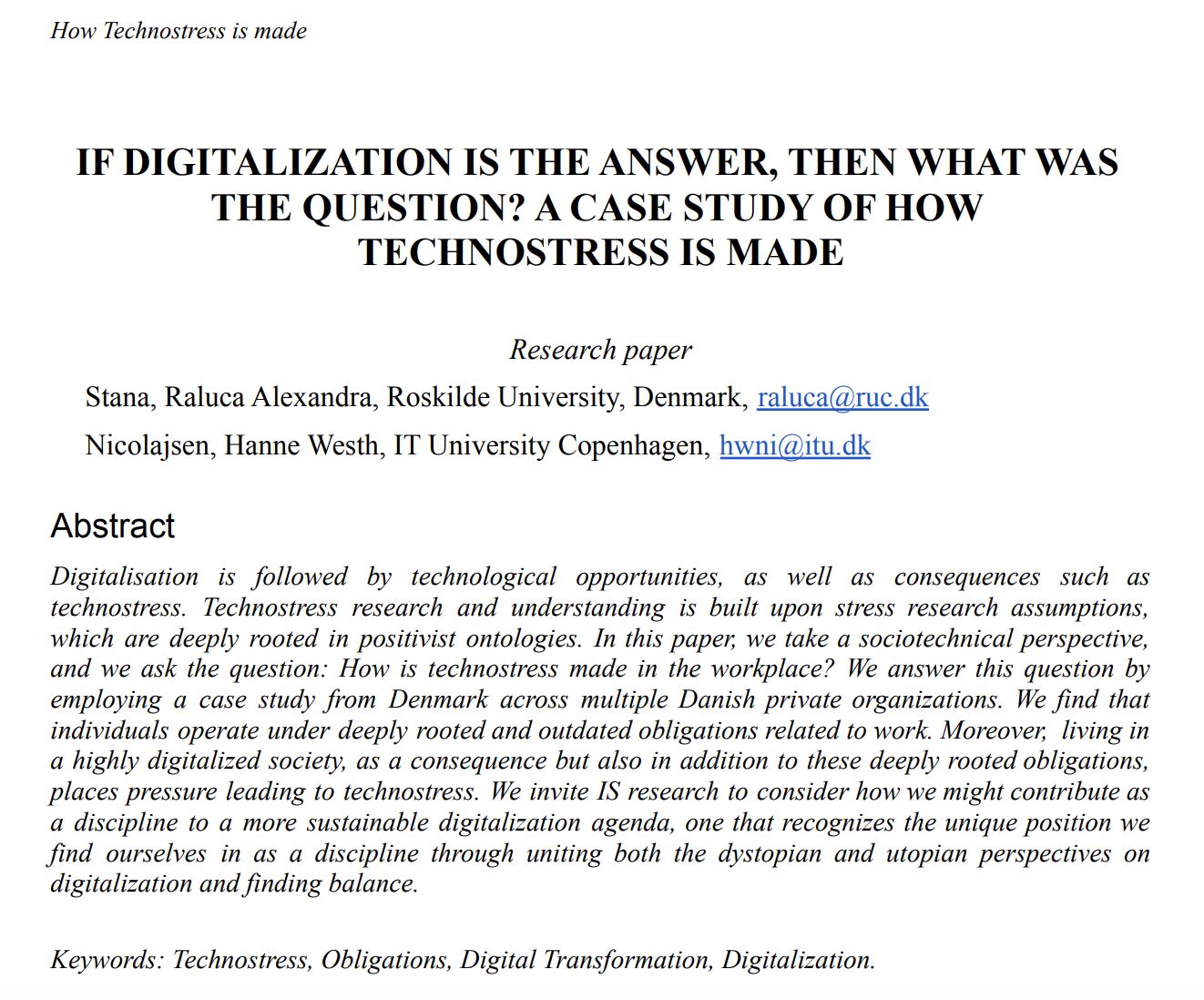
Building further on our soon five years of researching #technostress in Danish #organisations, Hanne Westh Nicolajsen and I wrote a provocative piece titled: “If digitalization is the answer, then what was the question. A case study of how technostress is made.” – which was selected for publication in the proceedings of The 45th Information Systems Research Seminar in Scandinavia. Although…
-

Great news: Soon, my supervisor, Assoc. Prof. Hanne Westh Nicolajsen, and I, we will have the pleasure to publish a book chapter titled: “Sociological mechanisms behind ICT related technostress in the workplace“, in the book: “Information Technology in Organisations and Societies: Multidisciplinary Perspectives from AI to Technostress”, published by Emerald Group Publishing. This book zooms…
-

Why do we stereotype? And how does stereotyping affect trust and performance in (virtual) teams? A stereotype is a “fixed, over generalized belief about a particular group or class of people”. (Cardwell, 1996). Stereotypes help us simplify our social world and it enables us to respond rapidly to situations, but a disadvantage according to McLeod…
-

This article provides a research-based approach to how digital leaders can use writing techniques, such as summarizing, persuading and storytelling, to lead through writing, in a world where we don’t always see our employees face-to-face. I’ve been increasingly challenging my students with how to be socially intelligent online, and they’ve challenged me back to provide…
-

At the time of writing this statement, I am employed at the IT University of Copenhagen as a Ph.D. Fellow, focused on Digital Leadership and Emotions in Information Systems. So far, I have served as a Teaching Assistant on two courses: “Navigating Complexity,” and “Digital Change Management,” where I had the responsibility for the exercise…
-

The framework presented in this blog post was created for the workshop: Digital leadership and communication. You are welcome to use it with the right crediting. RALUCA STANA
-

Reflections on our first workshop – “Digital Leadership and Communication” On 8th of September, 2017, 12 handpicked leaders from Danish companies met at IT University of Copenhagen to learn about the chances and challenges of digital communication for leaders. After an introduction of the I4L project, the team members, as well as the participants, the…